

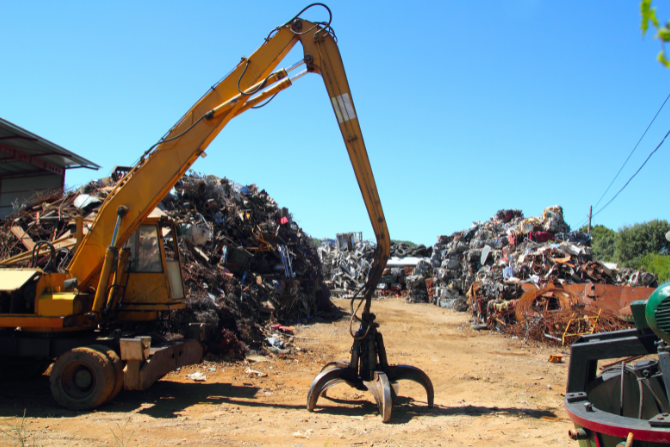
For decades, the scrap metal industry ran on handshakes, phone calls, and personal networks. Deals were local, margins were opaque, and your growth was only as wide as your broker’s rolodex. That era is over. A new generation of digital scrap marketplace platforms – led by ScrapGo – is rewriting the rules of how buyers and sellers source, haul, and transact scrap metal at scale.
If your business is still relying on traditional broker relationships to move material, you’re not just leaving money on the table – you’re operating with a structural disadvantage that compounds every quarter. Here’s what’s changed, why it matters, and how ScrapGo is leading the digital transformation of the scrap industry.
How the Old Way Was Costing You Money
If you’ve been in the scrap industry for any length of time, you know the drill. You call your usual contacts, wait for a broker to get back to you, negotiate blind on price, and hope the material matches what you were told. The traditional model – built entirely on personal relationships and fragmented phone-based deal-making – was never designed for scale. It was designed for survival.
The problem becomes even sharper when you’re running high-volume operations. Industrial scrap buyers sourcing material for manufacturing or processing facilities need volume, consistency, and verified quality. Relying on a broker who has relationships with only 10–12 buyers simply doesn’t work when you need a reliable, consistent supply chain.
Most scrap brokers say they have relationships with 10–12 buyers. Of that group, maybe 5 get the bulk of that broker’s business. Why limit your operation to the depth of one broker’s personal network?
The result of the old model is predictable: constrained supply chains, inconsistent material quality, price opacity, and enormous amounts of management time spent on logistics that should have been someone else’s problem. It was a structural inefficiency the industry accepted because there was no better alternative. Until now.
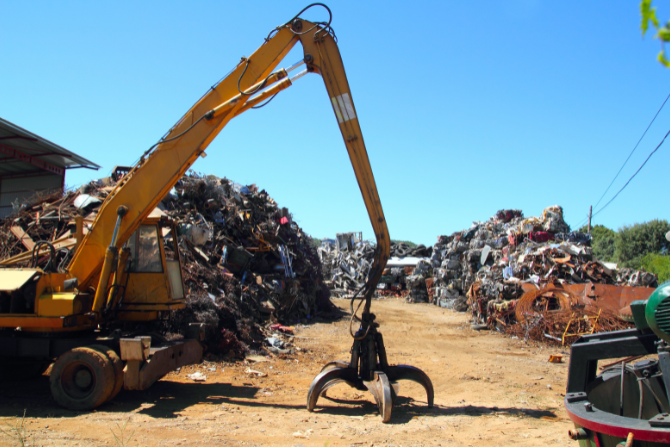
The Rise of the Digital Scrap Marketplace
The shift toward digital scrap marketplaces mirrors what happened in every other industrial procurement category over the past two decades. Buyers in steel, chemicals, and commodities all eventually migrated from broker-dependent models to platform-driven ones – because platforms deliver something brokers structurally cannot: breadth, speed, verification, and price transparency at scale.
The scrap metal industry is now experiencing this same transformation. Commercial scrap buyers and sellers are moving transactions online, leveraging platforms that consolidate verified listings, handle logistics end-to-end, and enable competitive pricing – all in one place. The days of manually searching for “scrap and metal near me“ through local contacts are giving way to nationwide digital sourcing.
This is precisely where ScrapGo (scrapgo.com) has built its competitive advantage. Rather than being another classified ad board or broker substitute, ScrapGo operates as a true scrap marketplace – a controlled, verified, logistics-enabled platform designed specifically to support commercial scrap buying and industrial supply chains.
What Makes ScrapGo Different from Everything Else
There’s an important distinction between how ScrapGo operates vs. open platforms like Craigslist or traditional broker networks. ScrapGo is not an open listing board where anyone can post material they may or may not actually have. It is a controlled inventory marketplace where every listing is screened, verified, and actively managed.
Screened Sellers Only Every seller on ScrapGo goes through an extensive screening process before joining the platform. Not just anyone can post material – ScrapGo controls what gets listed, ensuring every buyer deals with vetted, credible sources only.
Verified Material with Documentation All listed materials are verified before going live. Listings include pictures, and environmental certificates are on file where required. Material chemistry is available upon request – critical for operations with compliance or quality standards.
Always-Current Listings Expired listings are purged regularly. Everything visible on the platform is available – eliminating the wasted time of chasing dead leads that plagues traditional broker channels.
End-to-End Transaction Management ScrapGo manages the full transaction cycle – from listing to payment to delivery. The platform acts as an escrow agent, disbursing funds upon approval from both parties, removing financial risk from every deal.
Competitive Bidding Structure Rather than accepting whatever price a broker offers, buyers on ScrapGo submit firm competitive bids based on material type, volume, and current market conditions. Sellers get better margins. Buyers get better pricing. The marketplace wins over the middleman every time.
Scrap Hauling: The Logistics Layer That Changes Everything
One of the most underappreciated pain points in scrap transactions is logistics. In the traditional model, coordinating scrap hauling is a separate, parallel headache – you source the material through one channel and then scramble to arrange transportation through another. Fleet costs, driver availability, scheduling conflicts, and paperwork all eat into margins and management time.
ScrapGo eliminates this entirely. The platform provides professional scrap hauling services as an integrated part of every transaction. Whether you’re buying or selling, ScrapGo coordinates transportation through its nationwide network of carriers. If you’re buying scrap metal, a truck picks up the material and delivers it directly to your facility. If you’re selling, you load the truck and ScrapGo handles the rest.
ScrapGo takes care of all transportation when buying or selling through the platform. This gives operators fewer headaches with paperwork and logistics – and gives you time back to focus on growing your operation.
The hauling model is built for scale. ScrapGo’s flexible scheduling accommodates business operations, and its wide carrier network drives down transportation costs – with savings passed directly to clients. For operations running consistent, high-volume cycles, this is a structural advantage, not just a convenience feature.
Buying Scrap Metal at Scale: How the Platform Works
For operations running a mill, a processing facility, or a multi-location scrapyard – the challenge of buying scrap metal has always been sourcing at consistent quality and volume. The ScrapGo platform is specifically designed to solve this.
The buying process is straightforward. Buyers browse verified listings from screened sellers, submit competitive bids based on material type, volume, and specific requirements, and ScrapGo handles logistics and delivery to the facility. For operations with consistent sourcing needs, the platform supports repeat, high-volume purchasing cycles – making it a genuine supply chain solution rather than a one-off transaction tool.
Critically, ScrapGo also provides material chemistry and specification data upon request. Environmental certificates are on file where required. The combination of verification, documentation, and logistics coordination makes scrap metal purchase via ScrapGo a level above anything achievable through traditional broker channels.
Traditional Broker Model vs. ScrapGo: A Direct Comparison
| Factor | Traditional Broker | ScrapGo Marketplace |
| Seller Verification | Varies – often unvetted | Mandatory screening |
| Material Documentation | Rarely available | Photos, certs, chemistry on file |
| Logistics Management | Arranged separately | Fully managed by ScrapGo |
| Market Reach | 5–12 personal contacts | Nationwide, 5,400+ members |
| Price Transparency | Opaque, broker-controlled | Competitive bidding model |
| Listing Accuracy | Often stale or inaccurate | Expired listings purged regularly |
| Transaction Security | No formal escrow | Escrow disbursement on approval |
| High-Volume Support | Limited by broker capacity | Built for repeat, high-volume sourcing |
Crushed Car Hauling & Commercial Truck Salvage: Specialized Verticals
Beyond standard scrap metal transactions, ScrapGo addresses two additional verticals historically underserved by the digital shift: crushed car hauling and commercial truck salvage.
For scrapyards and auto recyclers managing inventories of crushed vehicles, ScrapGo’s crushed car service offers a network-driven solution where joining the larger platform translates directly into better rates. By moving more tons collectively, individual operators benefit from shared scale – and ScrapGo’s transportation coverage means operators no longer need to run their own trucks, reclaiming fleet costs and employee time.
On the commercial truck side, ScrapGo’s Uglytruck division serves operations looking to sell wrecked or decommissioned Class B vehicles – box trucks, buses, dump trucks, and garbage trucks. The model mirrors ScrapGo’s core value proposition: broader buyer reach, better pricing, and logistics managed end-to-end. The only requirement is that the drivetrain – engine and transmission – must be intact. Everything else, ScrapGo handles.
Why “Scrap and Metal Near Me” Is No Longer the Right Search
For years, sourcing in the scrap industry started with proximity. You searched “scrap and metal near me” because local was the only practical option – logistics costs made long-distance sourcing unviable, and verifying remote sellers was nearly impossible.
The ScrapGo model makes geography increasingly irrelevant. With logistics managed at the platform level – and a nationwide carrier network that drives down transportation costs – buyers can now source from the best verified seller at the best price, regardless of location. More sellers compete for your business, which directly improves pricing for buyers and expands the addressable market for sellers.
This is the fundamental shift. “Scrap and metal near me” was a constraint imposed by the limitations of the old model. Digital scrap marketplaces remove that constraint – replacing geographic proximity with verified quality, competitive pricing, and managed logistics.
ScrapGo Doesn’t Replace Your Business. It Amplifies It.
A common concern among established operators considering a digital transition is disruption – the fear that adopting a platform means abandoning existing structures or relationships. ScrapGo’s model is explicitly designed to address this.
The platform positions itself as an enhancement layer on top of existing operations. Current buying and selling structures stay intact. ScrapGo adds to them – expanding marketplace reach, introducing new material sources, and handling logistics – with minimal incremental effort from the operator.
ScrapGo doesn’t replace your current structure. It enhances it by expanding your marketplace with little to no effort on your part.
For operations already generating revenue through traditional channels, adding ScrapGo is an additive play – more sources, more buyers, more volume, better margins. It’s a growth multiplier that plugs into existing scrap operations and immediately expands their commercial ceiling.
The Bottom Line
The scrap industry’s shift from offline deal-making to digital platforms is not a trend – it’s a structural change in how scrap is sourced, priced, and moved. The businesses that adapt early will benefit from broader market access, better pricing, reduced logistics overhead, and more reliable material sourcing. Those that wait will find themselves increasingly locked out of competitive supply chains.
ScrapGo is built specifically for this transition. As a dedicated scrap marketplace with verified listings, end-to-end transaction management, integrated scrap hauling, crushed car hauling, and commercial truck salvage services, it represents the most complete digital infrastructure available for scrap operators today.
Whether you’re a buyer looking to expand your sourcing network or a seller looking to unlock better margins – ScrapGo is designed to make that happen, at scale, with less effort and more reliability than anything the traditional model can offer.
The question is no longer whether to go digital. It’s how quickly you can make the move before your competition does.