


Every crushed car that rolls into a scrapyard looks like a flat block of steel, but the real value often hides in the metal you cannot see. Copper wiring, motors, and connectors survive the press intact, which is why scrap buyers keep asking how much copper is in a car before they quote a price. The answer shifts with vehicle age, type, and size, and it shapes what a dealer should expect on every load. This guide breaks down where the copper sits, how it is recovered, and what it means for your margins.
How Much Copper Is in a Car on Average?
A typical gasoline-powered passenger vehicle holds roughly 50 pounds of copper, according to the Copper Development Association. Hybrids carry closer to 85 pounds, plug-in hybrids around 130 pounds, and battery electric vehicles can exceed 180 pounds. Age, trim level, and electronics all move the total, so no two vehicles hold exactly the same amount.
Anyone asking how much copper is in a car should separate total copper from recoverable copper. The figures above describe everything a vehicle carries, including copper bound up in circuit boards, sensors, and tiny motors that are expensive to isolate. What a scrapyard actually sells is a smaller share, and the gap depends on how the vehicle is processed. For a component-level breakdown, the Scrapgo guide on how much copper is in a car walks through the numbers scrap buyers rely on when they bid on loads.
Vehicle class matters as much as powertrain. A compact sedan built a decade ago has far less wiring than a modern crossover packed with driver-assistance cameras, heated seats, and infotainment. Heavy-duty pickups and vans add longer harness runs and larger starters, which lifts the total further. A single crushed car from a late-model SUV can therefore carry noticeably more copper than one from an older hatchback, even when both weigh the same on the scale. Treat averages as a starting point rather than a quote, and adjust for model year and trim before you price a load.
Where Does the Copper Hide Inside a Vehicle?
Most of a vehicle’s copper sits in the wiring harness, followed by the starter motor, alternator, and small electric motors that run windows, seats, wipers, and fans. Copper also appears in connectors, relays, and the radiator or heater core on older models. These parts are scattered, which is why recovery takes planning.
The wiring harness is the largest single source. It is a web of insulated copper strands that runs from the engine bay through the dashboard, doors, and floor to the trunk. Because the strands are wrapped in plastic and bundled with clips and connectors, the harness yields less clean metal than its weight suggests. Buyers who understand copper wire scrap grading know that insulated automotive wire is priced differently from bare bright wire, and that stripping or chopping it changes the payout.
Electric motors are the second major pocket. The starter, alternator, blower fan, window lifts, and power seat motors all contain tightly wound copper windings wrapped around steel cores. Each one is small, but a modern vehicle may contain dozens, and together they add meaningful weight. Older cars also used copper-brass radiators, although most newer models have switched to aluminum. Knowing these locations tells you why a crushed car is worth more than its steel weight alone, and why the next question is whether crushing destroys any of that value.
Does a Crushed Car Still Contain Its Copper?
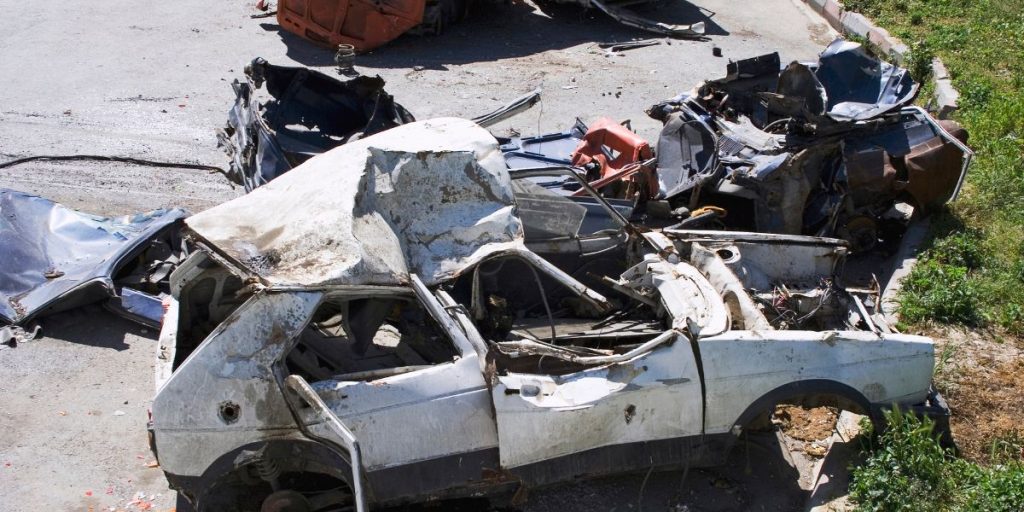
Yes. Crushing flattens a vehicle into a compact block, but it does not remove the copper. Wiring, motors, and connectors stay inside the block until a shredder or dismantling crew pulls them out. A crushed car therefore carries nearly the same copper as it did before it was pressed.
Crushing is mainly a logistics step. A flattened body stacks tightly, so a hauler can fit far more vehicles on a single truck and cut the cost per unit moved. The press compacts the shell and everything trapped inside it, which means the copper travels with the steel to its next stop. The Automotive Recyclers Association reports that roughly 86 percent of a vehicle by weight is reused or recycled, and copper is one of the most valuable fractions in that stream.
What changes is who captures the copper. Some yards pull the harness, starter, and alternator before crushing and sell those parts separately. Others leave everything in place and sell the flattened vehicle to a shredder, which handles recovery downstream. Dealers who want a closer look at that downstream path can read how crushed cars are recycled, from the yard gate to the shredder floor. Either route works, but the choice affects your margin, so it helps to understand how recovery actually happens.
How Is Copper Recovered From a Crushed Car?
Copper is recovered in two ways: manual dismantling before crushing, and mechanical separation after shredding. Crews pull harnesses, starters, and alternators by hand, while shredders break the remaining body into fragments that magnets, eddy currents, and sorting systems divide into steel, aluminum, and a mixed non-ferrous stream.
Manual Dismantling Before Crushing
Hand removal gives the cleanest result. A trained worker can pull the main harness, the alternator, and the starter in minutes and sort each part into its own grade. Because these items stay separate from the steel body, they command better prices than mixed shredder output. The tradeoff is labor, so this method pays best on higher-volume loads or newer vehicles with heavy wiring.
Shredding and Sorting
When a crushed car goes straight to a shredder, hammers tear it into fist-sized pieces. Magnets lift the steel, eddy-current separators eject non-ferrous metals, and the leftover mix is sorted into aluminum, copper, brass, and zinc. This approach is fast, but some copper stays tangled with steel, which matters because steelmakers treat residual copper as a contaminant. Even small amounts can weaken finished steel. Recycled copper also matters well beyond the yard, since the U.S. Geological Survey estimates that scrap supplies roughly one-third of domestic copper consumption. Dealers who want to improve capture rates can study how businesses separate copper from other scrap metals before the material reaches the shredder.
What Is the Copper in a Crushed Car Worth?
The copper in a single car is worth modest money on its own, but the value compounds across volume. Multiply recoverable pounds by the current copper grade price, then subtract labor and processing losses. Because copper prices move daily, always check live quotes before you commit to a purchase or a sale.
A simple illustration shows the logic. Suppose a vehicle holds 50 pounds of copper and your yard recovers 40 percent of it as sellable material. That leaves 20 pounds to price, and the grade of those pounds (insulated wire, motor windings, or mixed non-ferrous) decides the rate. Multiply that figure by the day’s quote for each grade and you have a realistic number to compare against a flat per-ton offer for the whole vehicle. The numbers here are illustrative, not a price promise, so use your own recovery data wherever you have it.
The comparison matters because a flat offer may undervalue a vehicle that is rich in wiring and motors. A newer, feature-heavy model might earn more through selective dismantling, while a stripped older car may be better sold whole. For a deeper pricing view, review how much a crushed car is worth to see how dealers weigh steel, aluminum, and copper together. Once you know the worth of the copper inside, the remaining step is turning that knowledge into better buying and selling decisions.
Closing Perspective for Scrap Buyers and Dealers
Price each load by vehicle type, model year, and recovery method rather than by weight alone. Understanding how much copper is in a car lets you negotiate with confidence, decide whether to dismantle before crushing, and avoid selling valuable wire at steel prices.Every crushed car is a small bundle of recoverable metal, and the dealers who earn the most are the ones who know what is inside before the press closes. Start with the averages, adjust for the vehicle in front of you, and track your own recovery rates so your estimates sharpen over time. Pair that discipline with a buyer who values transparency, and your copper stops disappearing into steel pricing.
Scrapgo connects dealers, yards, and scrap buyers so every load is priced on what it actually holds. Visit Scrapgo to list your next load and see what your vehicles are really worth.
Frequently Asked Questions
A typical gasoline car holds about 50 pounds of copper, per the Copper Development Association. Hybrids carry around 85 pounds, and battery electric vehicles can exceed 180 pounds, depending on size, age, and electronics.
Yes. Crushing only flattens the body, so the wiring, motors, and connectors remain inside. The copper is recovered later through manual dismantling or through shredding and sorting at a processing facility.
Most copper sits in the wiring harness, with additional amounts in the starter, alternator, and small electric motors. Older vehicles may also contain copper or brass in the radiator and heater core.
Yes. Battery electric vehicles typically carry about three to four times the copper of a gasoline car because of larger motors, heavy cabling, and battery connections, based on Copper Development Association figures.
It often is when harnesses are easy to reach and labor costs are manageable. Pulling wiring, starters, and alternators lets you sell each as a separate grade, which often pays more than leaving everything for the shredder.
Estimate recoverable copper by vehicle type and model year, multiply by current grade prices, and subtract processing costs. Then compare that figure against a flat per-ton offer to see which sale route pays more.